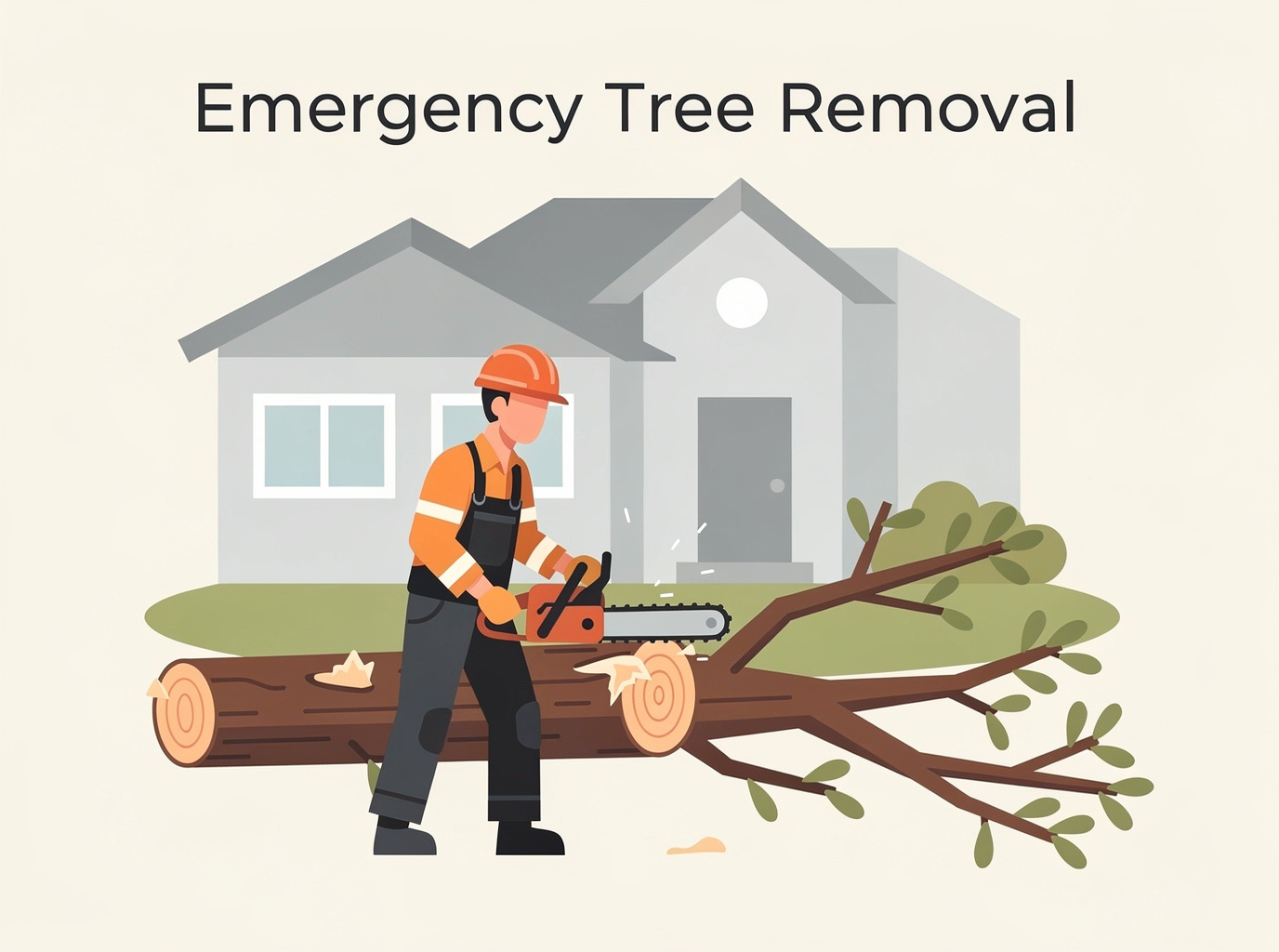
Emergency tree removal in Allen requires more than a chainsaw and a truck. When a live oak splits after a spring thunderstorm or a pecan leans toward a service line near Watters Crossing, we establish a drop zone, rig the canopy with rope and pulley systems, and cut in sections to protect roofs, fences, and underground utilities. Collin County and the City of Allen regulate removal of protected species and trees within public rights-of-way, so we check setbacks and permit triggers before cutting. Safety gear includes helmets, eye protection, cut-resistant chaps, and high-visibility apparel, and we coordinate with electric utilities when conductors are involved.
Allen's humid subtropical climate means hot summers and mild winters, which drives fast canopy growth and puts stress on root systems during drought spikes. The blackland prairie soils common across Collin can shrink and swell, destabilizing mature trees in older neighborhoods like Allen Heights and Twin Creeks. Properties near Creekside often deal with shallow water tables and creek-bank erosion that expose roots, while commercial lots around the Allen Event Center face different clearance challenges than residential lots near the Allen Public Library. We factor soil moisture, species, and property age into every emergency takedown plan.
Once the site is secured, we remove the tree in sections from the top down, lowering limbs with rigging rather than letting them fall uncontrolled. Stump grinding follows when access allows, and we haul debris to a disposal site rather than leaving brush piles that attract pests in Allen's warm climate. Our service area covers Allen and extends toward mckinney, plano, and frisco for larger storm-response calls, but we prioritize local jobs in Twin Creeks, Watters Crossing, Creekside, and Allen Heights. We are locally owned and owner-operated, provide upfront quotes, and stand behind workmanship you can inspect before we leave the site.
Technician insight
In Allen, the thing that catches most people out with Emergency Tree Removal is how fast our expansive clay soil can turn a stable-looking oak into a hazard after a heavy rain. Homeowners often wait until a limb is already hanging over the roof before calling, by which point the removal is more complex and expensive. A quick look at the root flare and trunk lean after a storm can tell you whether the whole tree needs to come down or just the damaged section.
Large Split Oak Near a Twin Creeks Driveway
A mature oak in a Twin Creeks front yard split down the trunk after a spring storm, with half the canopy hanging over a concrete driveway. We found a severe vertical crack and unstable root plate, making sectional removal the only safe option. We rigged the canopy, lowered sections away from the driveway, ground the stump, and hauled the debris, leaving the property clear and safe.
Emergency Tree Removal Services We Offer
✓Storm-Damaged Tree Removal
Rapid takedown of trees split by high winds or lightning, with sectional rigging to protect structures in Twin Creeks and Allen Heights.
✓Hazardous Limb Takedown
Removal of cracked or hanging limbs before they fall on driveways, roofs, or power lines, especially after summer storm cells move through Collin.
✓Leaning Tree Stabilization and Removal
Assessment of root plate failure in expansive clay soils, followed by controlled removal when cabling cannot save the tree.
✓Emergency Stump Grinding
Grinding stumps below grade after emergency removal to eliminate trip hazards and allow replanting or sod repair.
✓Utility-Line Tree Clearance
Coordinated removal of branches contacting or threatening electric and communication lines, with utility notification as required.
✓Debris Haul-Off and Site Cleanup
Loading and hauling brush, logs, and sawdust away so the property is left clear and safe for normal use.
How it works
- 1
Emergency Assessment
We inspect the tree, identify failure points, check proximity to structures and utilities, and determine whether sectional rigging or crane assist is needed.
- 2
Site Preparation and Safety Setup
Crews establish a drop zone, place warning signage, wear required PPE, and coordinate with utility providers if conductors are near the work area.
- 3
Controlled Removal and Stump Grinding
Limbs and trunk sections are cut and lowered piece by piece, then the stump is ground below grade when access and soil conditions allow.
- 4
Debris Removal and Final Inspection
All brush and wood are loaded and hauled away, the work area is raked and inspected, and the customer confirms the site is safe before we close the job.
Pricing
Pricing depends on tree size, species, site access, proximity to power lines, whether crane or bucket truck support is required, and how quickly the crew must respond. Emergency calls outside standard scheduling typically carry a higher labor rate because of after-hours dispatch and crew availability.